
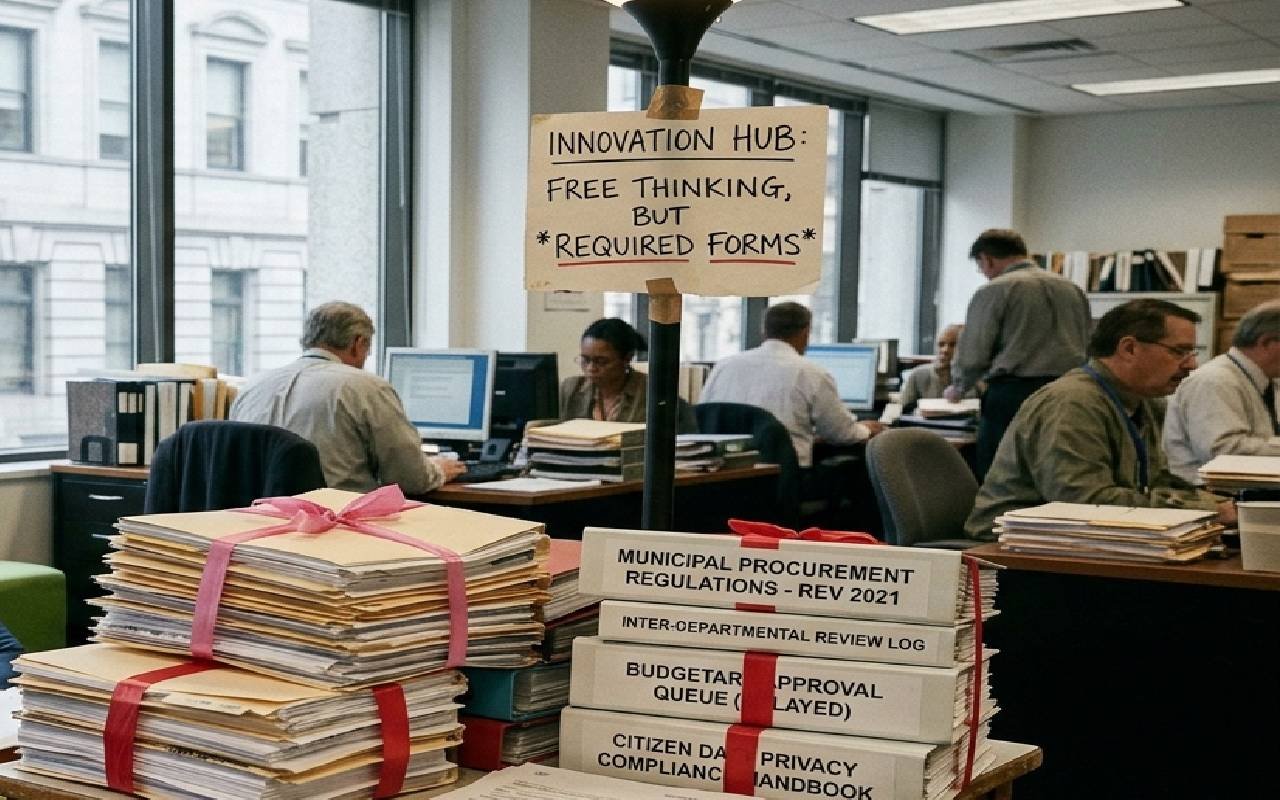

Public organizations play an important role in people’s daily lives. They provide essential services, implement government decisions, and directly affect the quality of life of citizens. For this reason, improving public sector performance is not only an administrative issue, but also a social and developmental need. In today’s changing environment, public organizations cannot depend only on routine procedures and traditional ways of working. They need employees who are able to think creatively, suggest new ideas, and contribute to better services.
One important factor in this process is job autonomy Job autonomy refers to the degree of freedom employees have in making decisions about their work, choosing how to complete their tasks, and solving problems in their own way. When employees are trusted and given some flexibility, they may feel more responsible, motivated, and confident in their work. In public organizations, this is especially important because strict procedures and centralized decisions can sometimes limit employees’ ability to respond quickly and creatively.
Another important concept is innovative work behavior in organizational management. This means more than simply having ideas. It includes identifying problems, suggesting new solutions, supporting useful changes, and helping to apply these ideas in the workplace. In the public sector, innovative behavior can help improve service quality, reduce unnecessary delays, and make government offices more responsive to citizens’ needs.
However, innovation does not happen only because employees have freedom. The workplace environment also matters. This is why innovative climate is an important variable in our study. Innovative climate means that the organization supports new ideas, encourages employees to share suggestions, provides resources, and creates a safe environment for trying better ways of working. When employees feel that their managers and colleagues' welcome new ideas, they are more likely to turn their freedom into real innovative behavior.
The study also Focus on affective commitment which refers to employees’ emotional attachment to their organization. Employees with strong affective commitment feel that they belong to their organization and care about its success. This type of commitment can encourage employees to work harder and contribute beyond their formal duties. However, commitment alone may not always be enough to create innovation, especially if the organizational environment does not support change.
Based on these ideas, our study examined the relationship between job autonomy and innovative work behavior in the public sector of the Kurdistan Region of Iraq. The study also investigated whether innovative climate and affective commitment help explain this relationship. Data were collected from 207 public sector employees working in different public offices, including passport affairs, police offices, public banks, and education offices in Halabja and Sulaymaniyah. The study was published in the International Journal of Public Administration under the title “The Relationship Between Job Autonomy and Innovative Work Behaviors in the Public Sector.”
The findings show that job autonomy has a positive effect on both innovative climate and affective commitment. This means that when employees feel they have more freedom in their work, they are more likely to perceive their workplace as supportive of innovation and feel more emotionally connected to their organization. However, the study found that autonomy alone does not directly lead to innovative work behavior.
This finding is important for the Kurdistan public sector. In many public organizations, employees may have some responsibility or freedom, but they may still hesitate to suggest new ideas because of bureaucracy, hierarchy, fear of mistakes, or lack of managerial support. Therefore, autonomy needs to be supported by an organizational climate that encourages innovation. In other words, giving employees freedom is useful, but it must be accompanied by trust, support, open communication, and encouragement from managers.
The study also shows that innovative climate plays a strong role in turning autonomy into innovative behavior. When public employees feel that their ideas are valued and that their workplace supports creativity, they are more likely to use their autonomy to improve work processes and services. Affective commitment also helps explain this relationship, but the results suggest that emotional attachment alone is not enough unless the workplace environment supports innovation.
The practical message of this study is clear: public managers should not only give employees tasks and responsibilities but also create a supportive culture where new ideas are welcomed. Managers can encourage innovation by listening to employees, supporting teamwork, recognizing creative suggestions, reducing fear of failure, and providing the necessary resources for improvement.
Overall, our study suggests that innovation in the public sector requires more than individual effort. It requires a workplace climate that allows employees to think, speak, and act creatively. For the Kurdistan Region, strengthening such an environment can help public organizations become more flexible, responsive, and effective in serving citizens.
Note:This study was conducted with the kind support of Dr. Haval Abubekir, Governor of Sulaymaniyah, to whom we extend our sincere thanks. The full version of the study is available at the link below. The summary presented here has been prepared with the assistance of an AI‑based tool..
https://www.tandfonline.com/doi/abs/10.1080/01900692.2025.2607443