
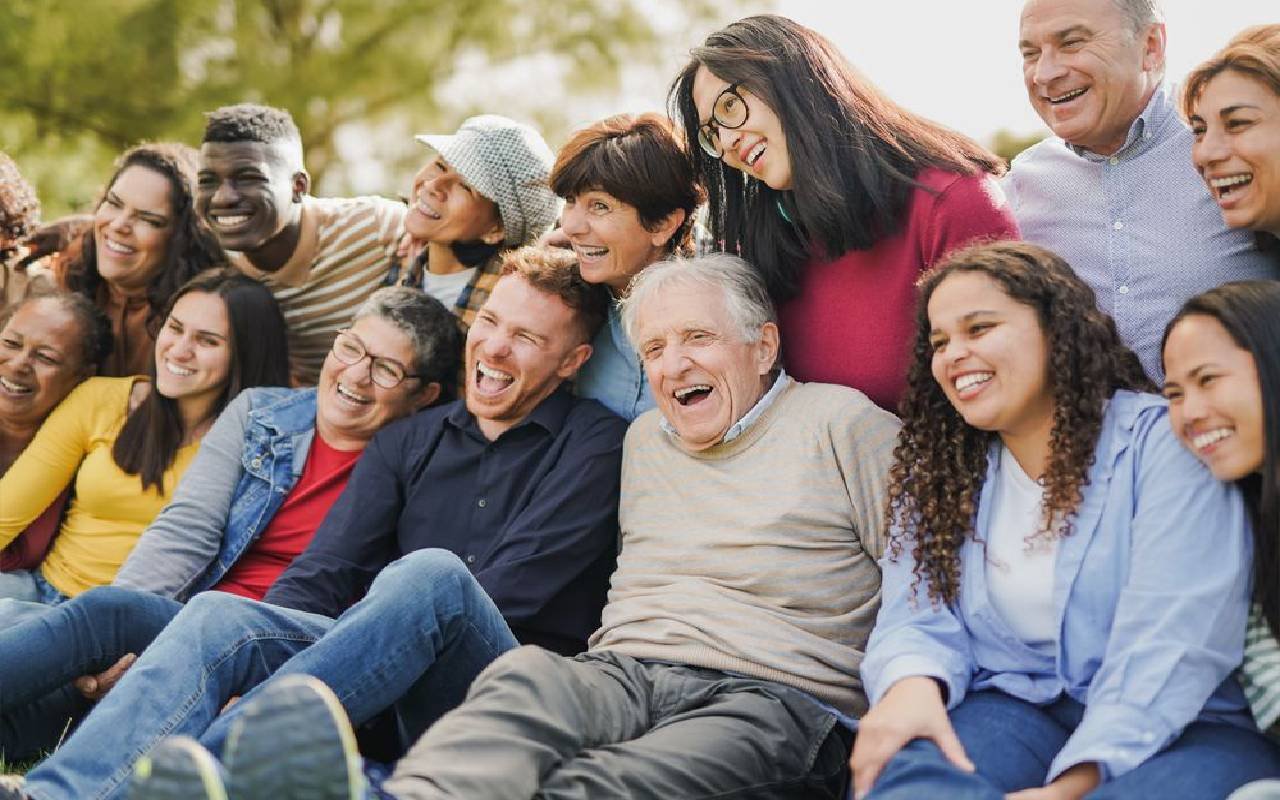

Our world has never been more confused. Different cultures, beliefs and ways of life now meet in the same context of society. This convergence, despite being a diverse wealth, can also lead to tensions if it is not managed properly or if bad thoughts and goals are introduced. .
Tolerance, contrary to its common meaning, is not a state of ”endurance”. Rather, it is an active effort to understand and accept. It is a behavior and feeling that we both learn and teach. Human beings are valuable for what they are, and it is this valuability that makes our differences contemplative rather than causes of tension. Since ancient times, the philosophy of our faith, which tells us to “love your creation for the sake of its Creator,” and in the world of thought it has built, tolerance is a horizon of kindness that is listened to by faith.
Tolerance takes on a much deeper meaning when it is accompanied by love and dialogue. Dialogue is not only a way to build relationships, it is also a moral responsibility that builds bridges between hearts. In today's world, where differences have become blurred and often divisive, this view makes more sense than ever.
History has shown us this fact many times; Where dialogue is silent, tensions come to the fore. Nelson Mandela's amnesties and Martin Luther King's non-violent movement demonstrate that tolerance is not only a valuable moral act but can become an important social turning point. That is why it is very important today to remind ourselves of this legacy and we need to knead our societies with this dough again.
Especially because we live in a digital age makes this need more important. In an age where information spreads rapidly, negative decision precedents can spread just as quickly. Instead of being a platform for dialogue, social networks can often become a field for tensions between opposing poles. For this reason, tolerance is not only a beautiful act of personal goodness, but also a means of harmonizing society.
The role of education in institutionalizing tolerance in all areas is crucial. Tolerance and dialogue must be at the heart of our educational systems. Those involved in this system, from educators to students, must be educated in such a way that tolerance, compassion and respect are the main principles. Social unity is achieved when there is widespread love and tolerance among individuals, when they accept differences as a sign of wealth and agree on common high values. This insight is a powerful roadmap for communities that are diverse.
When we look at the global level, the painting is no different. As the Dalai Lama often says, peace is sustained by kindness and understanding. This reminds us that tolerance is not a local need but a global need.
The times we live in today clearly tell us that we either make our differences a cause of conflict, or we interpret them as a common wealth. This election will determine not only today but also our future.
On this page of this magazine, we want to write more than a wish, we want it to be an invitation. An invitation to listen more, understand more and feel more for each other. Because we know that when tolerance prevails over a community it gives it not only peace but greater strength and survival