
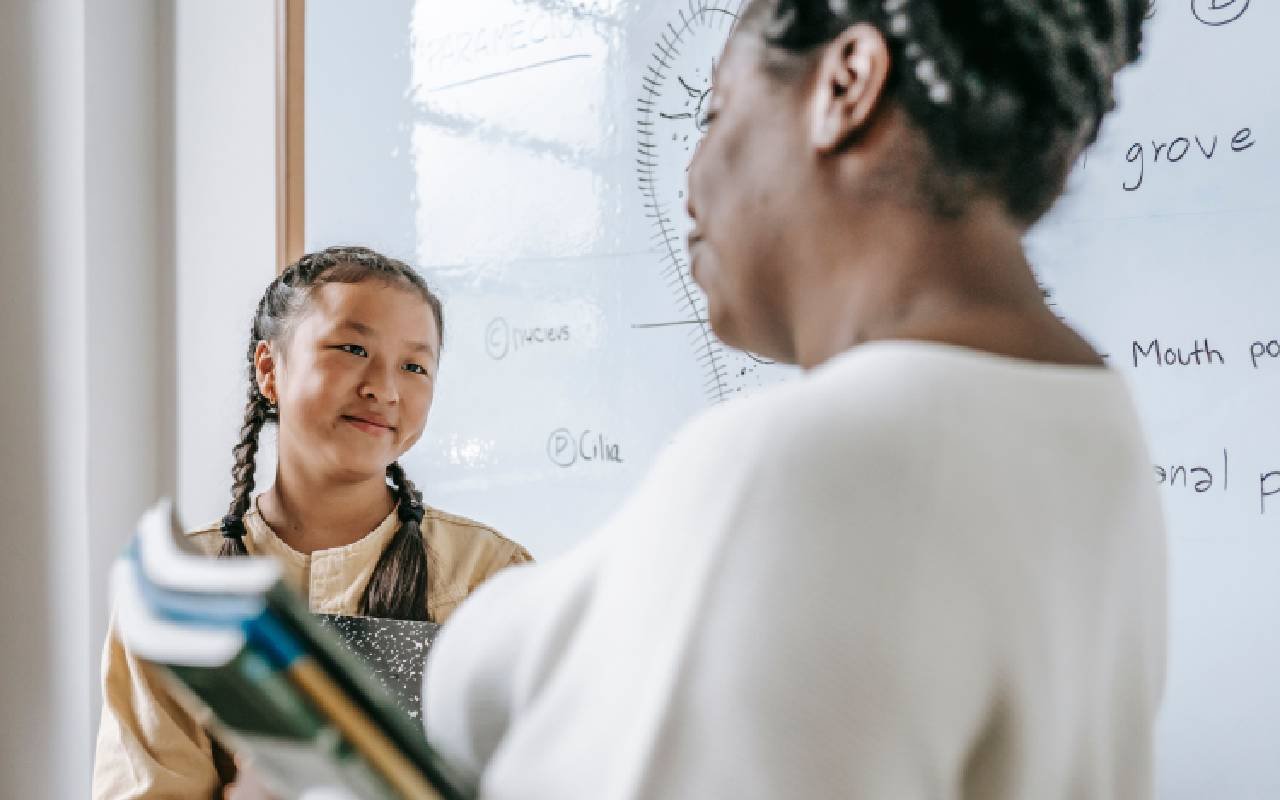

Education, apart from being merely a means of transmitting ready-made information through a specific curriculum, is a social relationship and confrontation between human consciousness and reality. That is, it is an institution where individuals are exposed to different ideas, question assumptions, negotiate and learn how to live with differences, but part of our country’s education still continues to operate through the logic of monologue. In the monologue, the teacher is viewed as the sole owner of truth and the learner as an empty vessel. Therefore, it is important to know that the work of education today is not only how to make learning more effective and achieve higher grades, but also how to change the equation between speaking and listening.
Monologue, because of the illusion of order and control it creates, looks good on the surface. In it, the teacher possesses the knowledge and what he or she says is expected to be accepted by the learner, and even academic success is often measured by the learner’s ability to reproduce that same knowledge. In such a system, classroom silence is misinterpreted as orderliness, obedience as learning, and wearing as understanding. While an education based on monologue produces a learner who knows how to give prepared answers, he has not learned how to formulate meaningful questions. It thus prevents critical thinking and research and sees reality as a fixed and unchanging landscape, rather than a living, troubled horizon that requires analysis, interpretation and change. When classrooms operate on this basis, they weaken the will of learners and make education a means of alienation rather than freedom and liberation.
This critique of traditional teaching methods is rooted in the ideas of Brazilian educator and critical philosopher Paulo Freire. In his book The Pedagogy of the Oppressed, Freire based his theory on shaping the relationship between teacher and learner, calling the traditional and monologic banking model a paradigm in which information is treated as a commodity and the teacher puts it into the passive consciousness of the learner Depositing money in a bank and withdrawing it when required (during probation).
In contrast, Freire adopted the dialogue model, arguing that dialogue does not only mean giving learners more opportunities to speak, but also praising learners as key participants in the production of knowledge. In such a classroom, the teacher does not lose power, but changes the nature of the power and becomes a facilitator from a mere source of information. The teacher presents a question or topic, then identifies and interprets the problem together with the students, to develop a critical awareness of their social and intellectual situation.
The transition from monologue to dialogue in academic institutions and education is necessary and has been done in our country through teacher training courses in schools, as well as pedagogical courses for university teachers. Because of the rapid changes in technology and information that have swept the world in modern times, the transmission of information and facts alone makes science incomplete and outdated. In turn, dialogue trains students and teachers in the in-depth analysis necessary to assess diverse situations and events and bring together different perspectives. It creates an environment, where intellectual power is gained through open discussion and inquiry, not conferred by status. In these classes, where students are encouraged to speak, listen, discuss and defend their perspectives, beyond just academic knowledge, a spirit of citizenship is also instilled among students.
That is, the future of education is a balance between listening and speaking. A decent educational institution in the 21st century teaches students not only what to think, but also how to think, how to listen, how to ask questions and how to live with different opinions. Creating space for these subtle conversations keeps education as an enduring and vibrant force for intellectual emancipation, one that allows individuals not only to understand the world around them, but also to actively participate in shaping its future. Ultimately, the most powerful classroom is not one in which one voice dominates, but a space in which a group of different voices learn how to think, critique, and make a difference together.